Groceries in Bahrain: What One Month of Food Really Costs
Rent is the biggest line in most Bahrain budgets. Food is the second biggest — and it is the only large one you can change every week. You cannot renegotiate rent on a Tuesday evening, but you can decide what goes in the trolley.
Most people have no idea what they spend on food. They know the supermarket bill, roughly. They do not count the bakery stop, the karak, the delivery order on Thursday, or the school canteen money. Added together, these are often 25% of take-home pay.
The real number for a family of four
Here is a normal month, not a strict one:
- Supermarket, four weekly shops: BD 42–48 each = BD 168–192
- Outside food (one family meal out, two deliveries, karak and snacks) = BD 40–60
- Total food: about BD 210–250 a month
For a BD 800 salary, that is 26–31% of everything you earn. For BD 1,200, it is 17–21%. Same basket, very different weight. This is why food is where a tight month is won or lost.
What that looks like per meal
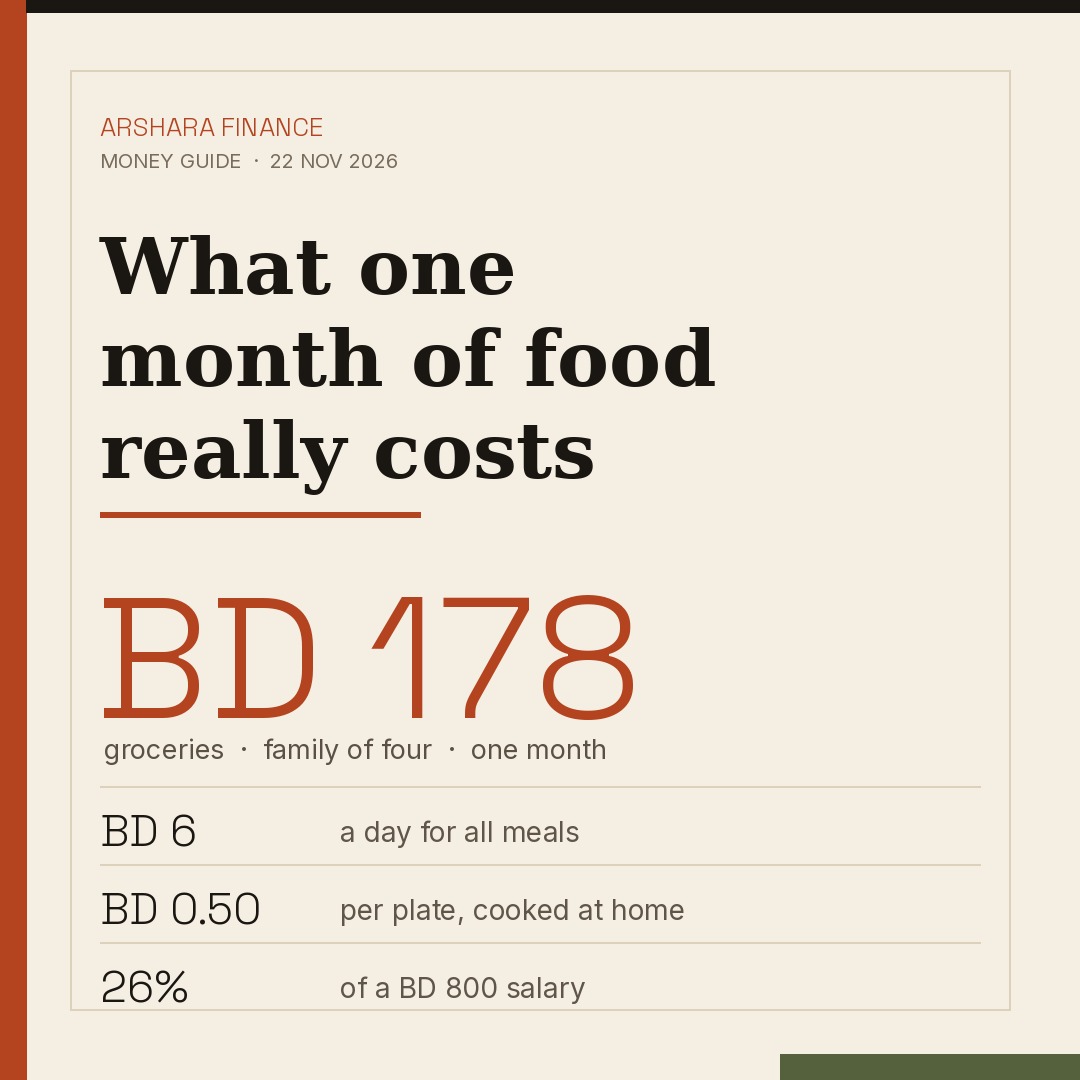
BD 180 of groceries over 30 days is BD 6 a day. Three meals for four people is 12 plates, so BD 0.50 per plate. That is the number to hold in your head when you compare cooking with ordering.
Now the same meal delivered: a main dish around BD 5.5, a delivery fee near BD 1.2, and a small service charge on top — call it BD 7.5 for one person's dinner. The home-cooked version of that plate costs under BD 1.
A basket you can actually check
Prices move, but the shape of a weekly basket stays the same. A realistic BD 44 shop for four people:
- Rice 5 kg — BD 2.4 | Lentils 1 kg — BD 0.9
- Chicken 2 kg — BD 3.8 | Eggs 30 — BD 2.3
- Milk 4 L — BD 2.2 | Yoghurt 1 kg — BD 1.1
- Onions, tomatoes, potatoes, carrots — BD 3.2
- Seasonal vegetables and fruit — BD 9
- Cooking oil, bread, tea, sugar — BD 5.5
- Cleaning and household — BD 6
- Small top-up trip mid-week — BD 7.6
Notice the last line. The mid-week top-up is where most budgets leak: you already shopped, then you buy again because the plan ran out on Wednesday.
Where the money actually leaks
1. Deliveries. Twice a week at BD 7.5 is BD 60 a month. Cooking the same two meals costs about BD 5 in ingredients. That single habit is BD 40–45 a month, BD 500 a year.
2. Shopping without a list. A list is not about discipline. It is about not buying a third bottle of oil you already have at home.
3. Buying in the small size. Price per kilo tells the truth. A 5 kg rice bag is usually 20–30% cheaper per kilo than the 1 kg bag, and rice does not expire next week.
4. Cooking one meal at a time. If the pot is already on, doubling the batch gives you lunch for two days at almost no extra cost.
5. Not knowing the monthly figure. What you do not measure, you cannot cap. Most people guess their food spend and guess low by 30%.
Five habits that save BD 30–40 a month
- Plan seven dinners on Friday. Write them down, then build one shopping list from that plan. Seven dinners is enough; you do not need to plan breakfast.
- Shop once a week, with cash or a fixed card limit. One big shop beats four small ones, because every extra visit adds two unplanned items.
- Keep a food wallet. Move BD 50 a week to a separate wallet or account. When it is empty, the week is done. This is a limit, not a diet.
- Buy staples monthly, fresh food weekly. Rice, oil, lentils and cleaning products in one monthly trip; vegetables, milk and bread weekly.
- Cook double twice a week. Two big pots on Sunday and Wednesday covers four lunches.
Set the limit before the month starts
A simple rule for Bahrain: keep all food under 25% of take-home pay. BD 800 becomes BD 200; BD 1,200 becomes BD 300. Inside that, aim for groceries at 18–20% and outside food at 5%.
If your food total is already above 30%, do not try to fix everything at once. Cut deliveries to once a week for one month and see what the number does. That one change usually pays for the month's groceries gap on its own.
In Arshara Finance, set a monthly budget for the Food category and check it every Sunday, not on the 30th. Recording a spend takes a few seconds; finding out at month end that food ate the savings is the expensive part.
Track your food budget in one place
Free · No ads · No subscriptions · Your data stays yours
Open on Google Play